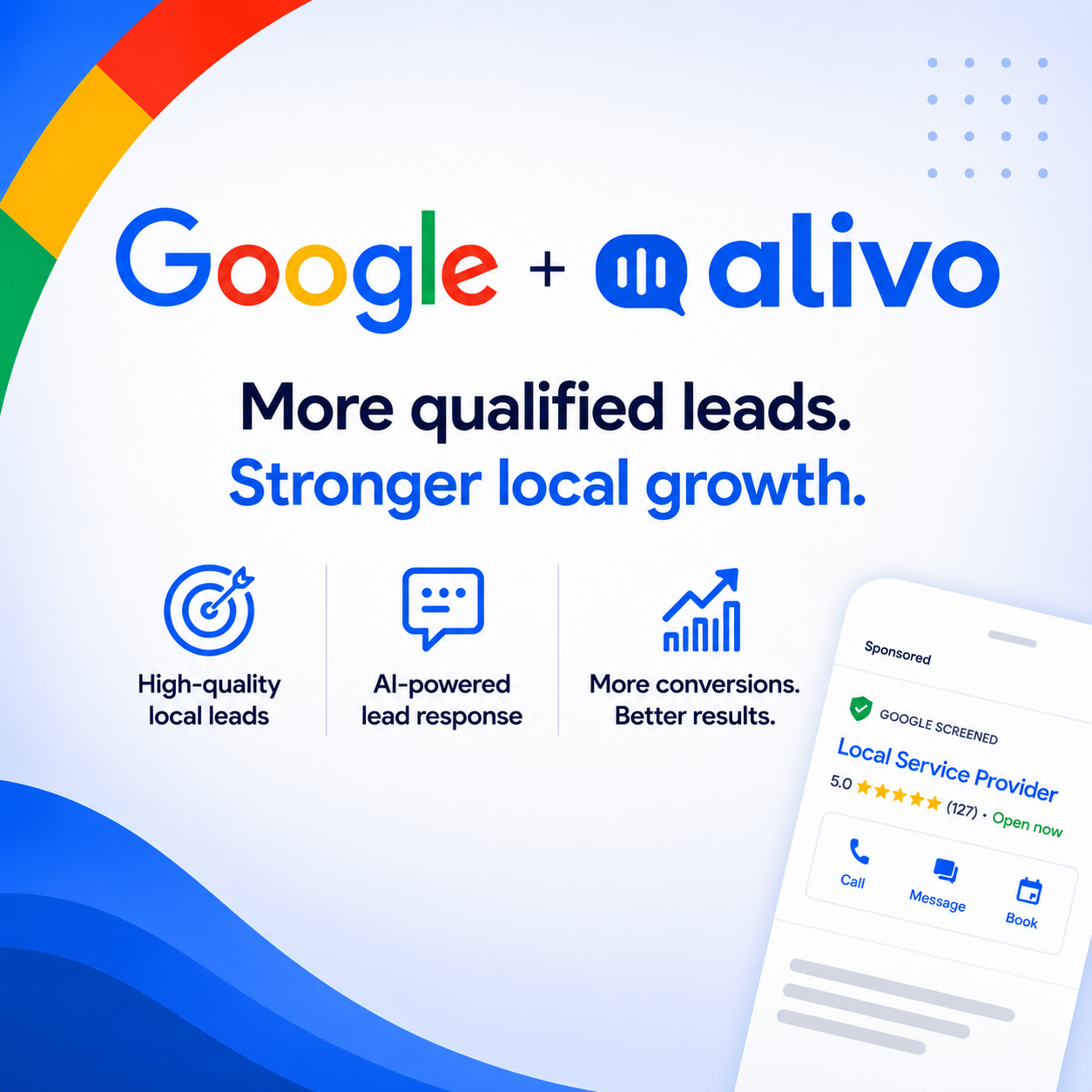
I want to start with something that took me a while to fully appreciate about Google Local Services Ads.
When a homeowner calls your LSA number, they have already done the work. They searched for a roofer. They found your listing. They checked your reviews. They hit the call button. That is a level of intent that most marketing channels cannot come close to producing. They were not scrolling Facebook and stumbled across your ad. They went looking for you specifically.
That makes it one of the most expensive things in roofing when nobody picks up.
The dirty secret of LSA performance is that most of the cost is not in the ad budget. It is in the leads you already paid for and never contacted.
How Google LSA Actually Works
LSA listings appear at the very top of search results. It sits above standard paid ads, above the map pack, and above organic listings. Your business name, star rating, response time indicator, and a direct call button. For roofing, the platform surfaces for searches like "roofer near me," "roof repair," "roofing contractor," and emergency terms like"roof leak" and "storm damage roof."
The billing model is pay-per-lead. You pay Google when a homeowner calls your number or sends a message through the platform. In most markets, that will run you between $25 and $90 per roofing lead.
Here is the part that stings. A missed call is still a paid lead. Google charges you for the opportunity regardless of whether you did anything with it.
Your ranking is also affected by how fast you respond. Google tracks response time and surfaces faster-responding contractors above slower ones. Which means your speed-to-lead is not just a conversion problem. It is a visibility problem. Slow down, and Google starts showing you less.
The Call Volume Reality
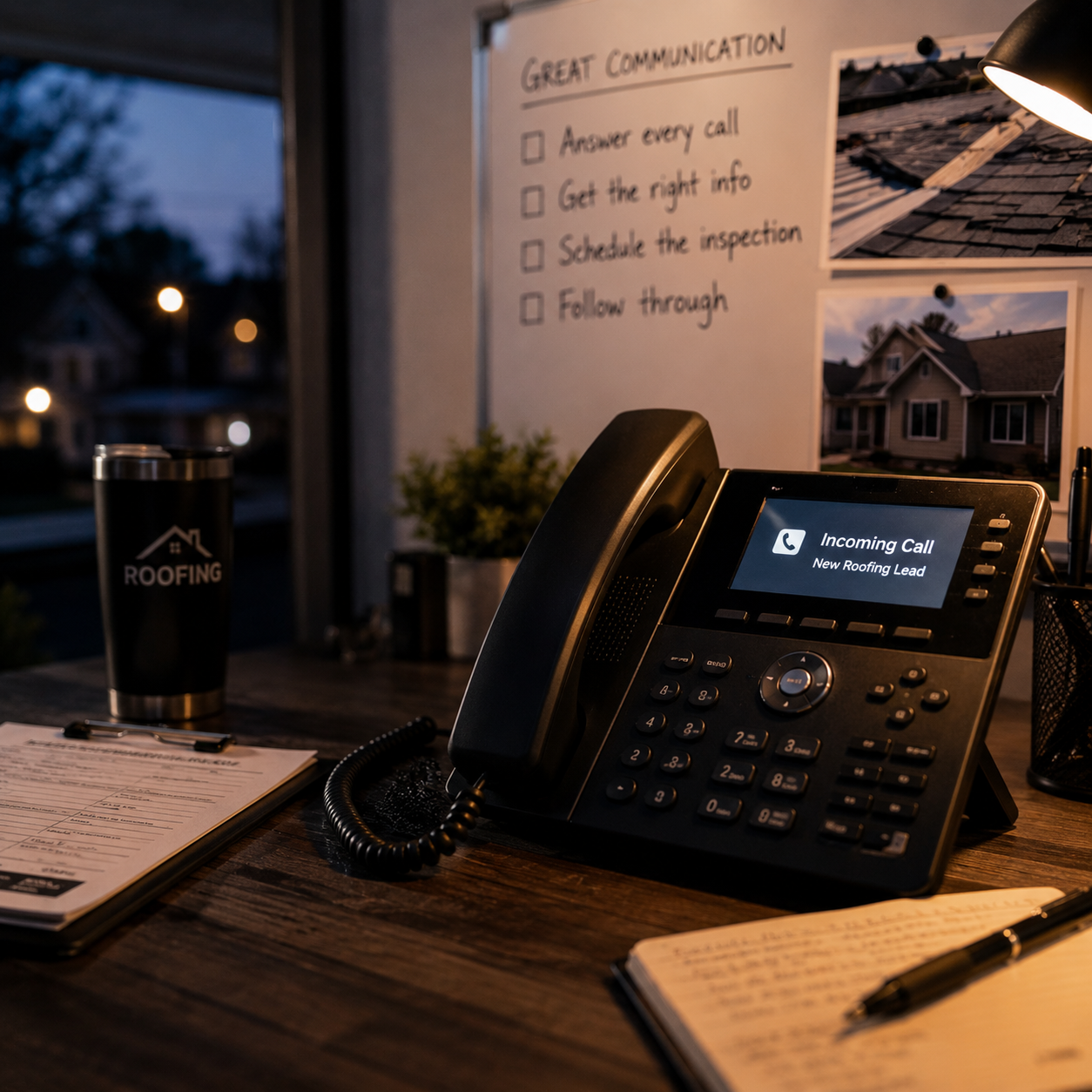
LSA generates phone calls. Not form fills. Just calls and messages directly in the LSA platform. Calls are different from every other lead type because they are synchronous. A form fill can sit in a queue for a few minutes and still be recoverable. A call that rings out is gone the moment the homeowner hangs up.
Here is a test worth running right now. Pull your LSA call history for the last 30 days. Count every call that lasted under 30 seconds. Any call that short almost certainly hit voicemail or disconnected immediately. In most roofing operations I talk to, 30 to 50 percent of LSA calls fall into that bucket. Multiply that count by your average cost per lead, and you have your monthly LSA waste number. Most contractors are surprised by how large it is.
The reasons are all predictable. Your team is on a roof. It is 7 PM. It is Saturday morning. A call comes in during a homeowner appointment. None of these are failures of effort. They are simply the reality of running a roofing business.
What Google Does When You Don't Answer
This is the part that most contractors do not realize, and this is big.
When a homeowner calls your LSA listing and nobody picks up, Google does not just leave them hanging. The platform immediately shows them a prompt to call the next contractor on the list. They do not have to go back to search. One tap and they are on with your competitor.
Google's goal is to get the homeowner's problem solved. If you cannot do that, they will find your competitor who can. The lead you paid for ends up booked on a competitor's calendar.
The contractors winning LSA consistently are not necessarily the ones with the best reviews or the biggest budgets. They are the ones who answer every call. Not most calls. Every call. The response time badge on your listing tells the whole story. Contractors listed as responding in under a minute get dramatically more volume than those listed as responding in hours.
A Contractor Who Felt This Firsthand
Sawyer Guinn, at Roofing and More, puts it better than I could:
"Before Alivo, we struggled to keep up with the incoming call volume. As more calls slipped through the cracks, our lead set rate plummeted to 78%. It felt like we were lighting our marketing budget on Fire."
That line about lighting the marketing budget on fire is exactly what unanswered LSA calls are. You paid Google to get a homeowner to call you. Then nobody answered.
The contractors I talk to every day are not losing LSA because the leads are bad. They are losing it because the infrastructure behind the ad was not built to capture what the ad generated.
What the Performance Data Shows
Across roofing operations that have implemented always-on call coverage for LSA, the numbers tell a consistent story.
Before implementing an answering system that responds to every call, the average roofing contractor converts LSA calls to booked appointments at roughly 45 to 55 percent. The remainder go to voicemail, get called back too late, or reach a homeowner who already booked with the contractor who answered first.
After implementing an AI answering service that picks up every LSA call in under 20 seconds, conversion rates move to 85%, and 100% answer rate. The call log that used to show dozens of short calls, all paid, all wasted, shows booked appointments instead.
One contractor tracked their LSA cost per acquired job before and after and found it dropped by 58%. The same ad spend. The difference was that nearly every lead converted, rather than half of them.
Sawyer's team went from a 78% lead set rate to 92% after implementing Alivo. Same leads. Same market. The only thing that changed was that every call got answered.
The LSA Message Problem
Calls are the biggest issue facing contractors using Google LSA to generate leads. Google LSA also allows homeowners to text through their platform, rather than calling. These are easy to miss because they live in the LSA inbox, which is separate from your email and CRM.
Google tracks message response time the same way it tracks call response time and factors both into your ranking. Consistently slow message responses push your listing down.
An AI system monitoring your LSA inbox and firing an immediate response closes this gap completely. The homeowner gets acknowledged within seconds, the conversation opens, and your ranking improves because your response time improves. The fix is the same one that solves the call problem. Always-on coverage across every channel the lead might come through.
Connecting LSA to Your Roofing Software
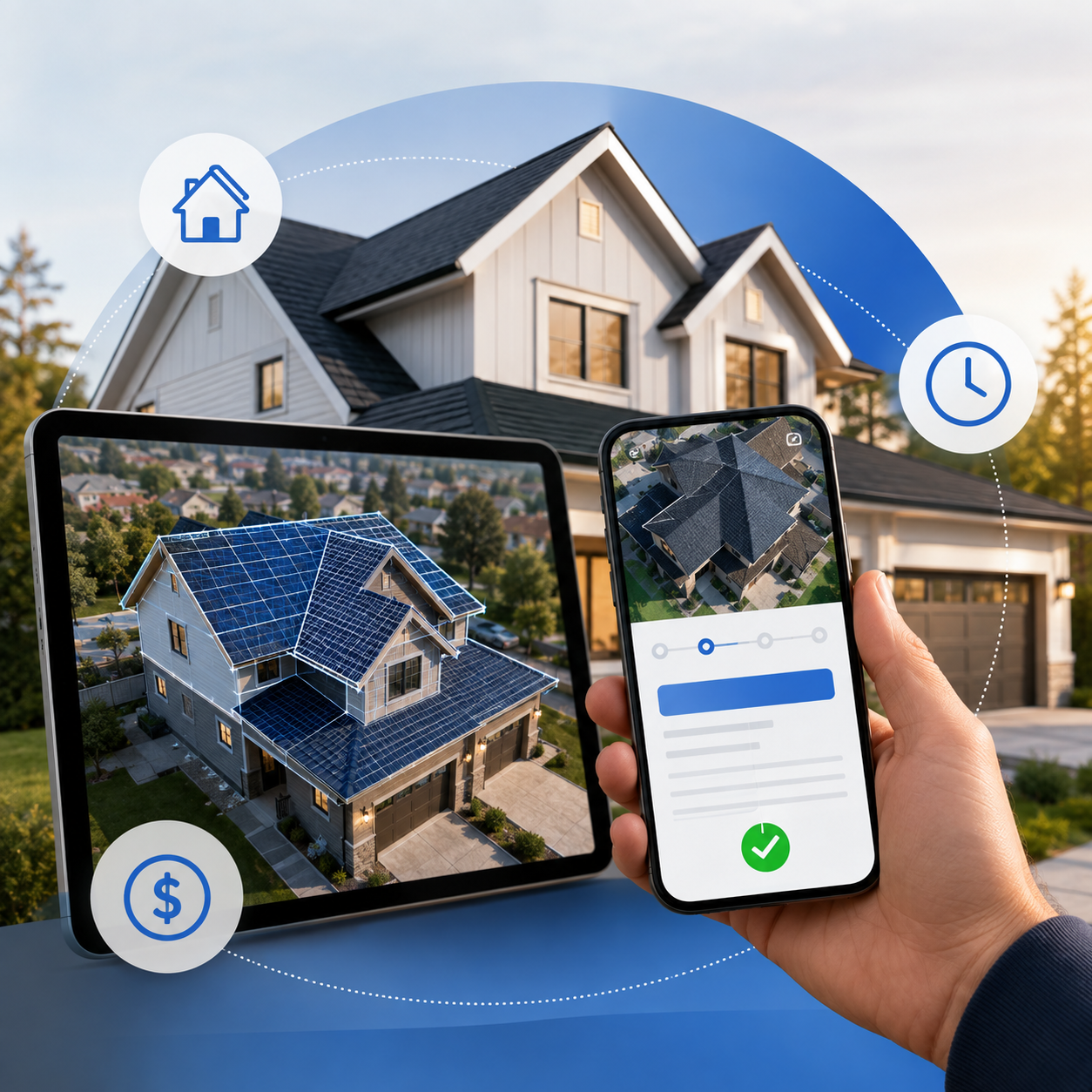
The highest performing contractors leveraging LSA have one more thing in common apart from a fast response time. They have connected their entire LSA pipeline to their CRM and scheduling system so that a call or message that results in a booked appointment requires zero manual data entry from anyone on the team.
When the AI answers a call, it does not just book the appointment. It creates the contact record, notes the lead source as LSA, schedules the slot, and triggers a pre-appointment workflow you have set up. The contractor wakes up to booked appointments with full lead details attached rather than a voicemail log to work through.
This integration connects your LSA account, your call handling system, and your roofing CRM. With Alivo, this setup happens during onboarding and does not require any technical work from your team.
If Your LSA Conversion Rate is Below 70%
Average numbers are great, but let's take a look at your numbers.
Pull the last 30 days of calls and categorize every one by outcome. Answered and booked. Answered and did not book. Missed and called back in time. Missed and lost. That breakdown tells you exactly where the funnel is leaking.
Put a dollar figure on missed calls. Average ticket multiplied by close rate on connected calls multiplied by missed call count. That number is your monthly LSA waste. It is usually larger than people expect and almost always larger than the cost of fixing it.
Implement always-on coverage. Every LSA call needs to be answered regardless of time. The economics of AI answering versus additional staffing are not close. AI coverage runs at a fraction of the cost and handles volume that no reasonable staffing level can match during a storm surge.
Connect your call handling to your CRM and calendar. Automate the handoff so no lead data falls through a manual entry gap.
Watch your response time metric in the LSA dashboard. Every improvement in the listed response time improves both your ranking and your call volume. Treat it as a performance number the same way you treat close rate.
LSA is your highest-intent lead source. It is worth building the infrastructure to actually capture what it generates.
Alivo's Lilly agent answers every Google LSA call in under 20 seconds, qualifies the homeowner, and books the inspection directly into your calendar. LSA leads never go to voicemail.
About the Author
Matthew Sanborn is a Process Specialist at Alivo, an AI lead engagement platform for roofing and home improvement contractors. His work includes regular conversations with roofing companies evaluating and operating CRM and lead-response systems.