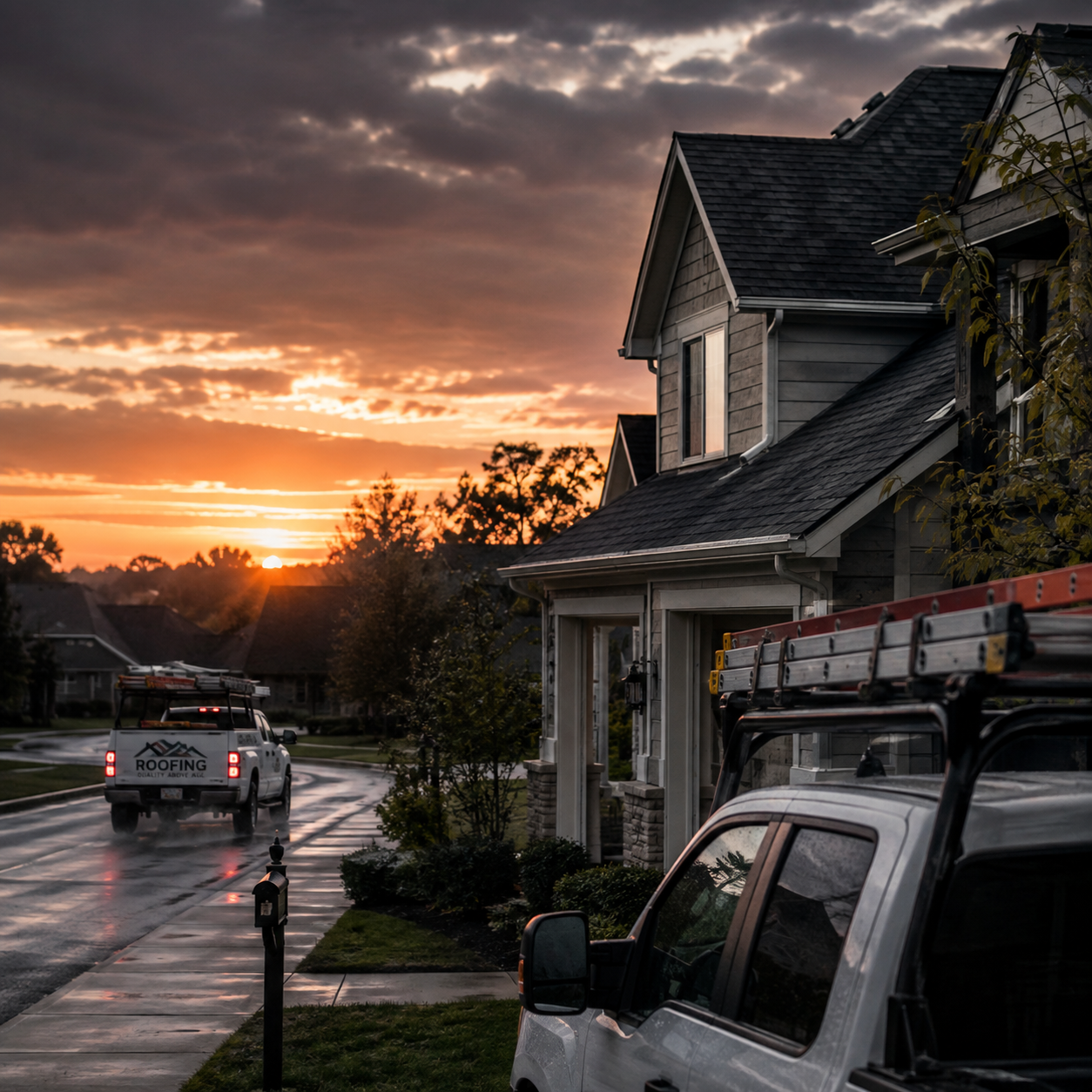
I talk to a lot of roofing company owners, and there's a line I hear constantly, almost word for word: "We have great communication during the project." Photos sent mid-install. A text when the crew's running late. Someone who actually calls back when a homeowner has a question about flashing. Owners say it with real pride, and most of the time, it's true.
Then I ask about the call that came in before any of that. Before there was a project to communicate about. And the story changes.
You're Not Wrong About Communication. You're Measuring It At The Wrong Point.
Nobody builds a roofing company on purpose to ignore people. The owners I talk to genuinely care about this. They just apply the standard starting at the wrong moment. Great communication during the project is real, and homeowners notice it, and it earns referrals. But it's happening after the hardest part is already won: getting the job in the first place.
The first call is the audition. There's no relationship yet, no crew on the roof, no invoice, nothing holding the homeowner to you except whether someone picks up and sounds like they know what they're doing. That's a higher bar than a mid-project check-in, not a lower one, and it's the one moment most roofing companies never think to measure.
The Habits Don't Transfer
A study by 411 Locals tracked the phone lines of 85 businesses across 58 industries for 30 days, and found that most calls never reached a live person. Seventy percent of the businesses answered less than half their calls. Small study, so treat it as directional. But it matches what I hear constantly. The same roofing company that texts a homeowner back in ten minutes on day twelve of a job let that homeowner's first call ring out on day one.
It's not hypocrisy. It's that the habits built for staying in touch during the project, checking a shared inbox, replying between tasks, don't exist yet for the first call, because nobody built them. Estimators are on roofs. Crews are mid-install. If you're running a smaller roofing company, you might be doing sales, scheduling, and the actual roofing in the same afternoon. There's a real system for staying in touch once someone's a customer. There's usually nothing for the sixty seconds before they are one.
What "Good Communication" Should Actually Include
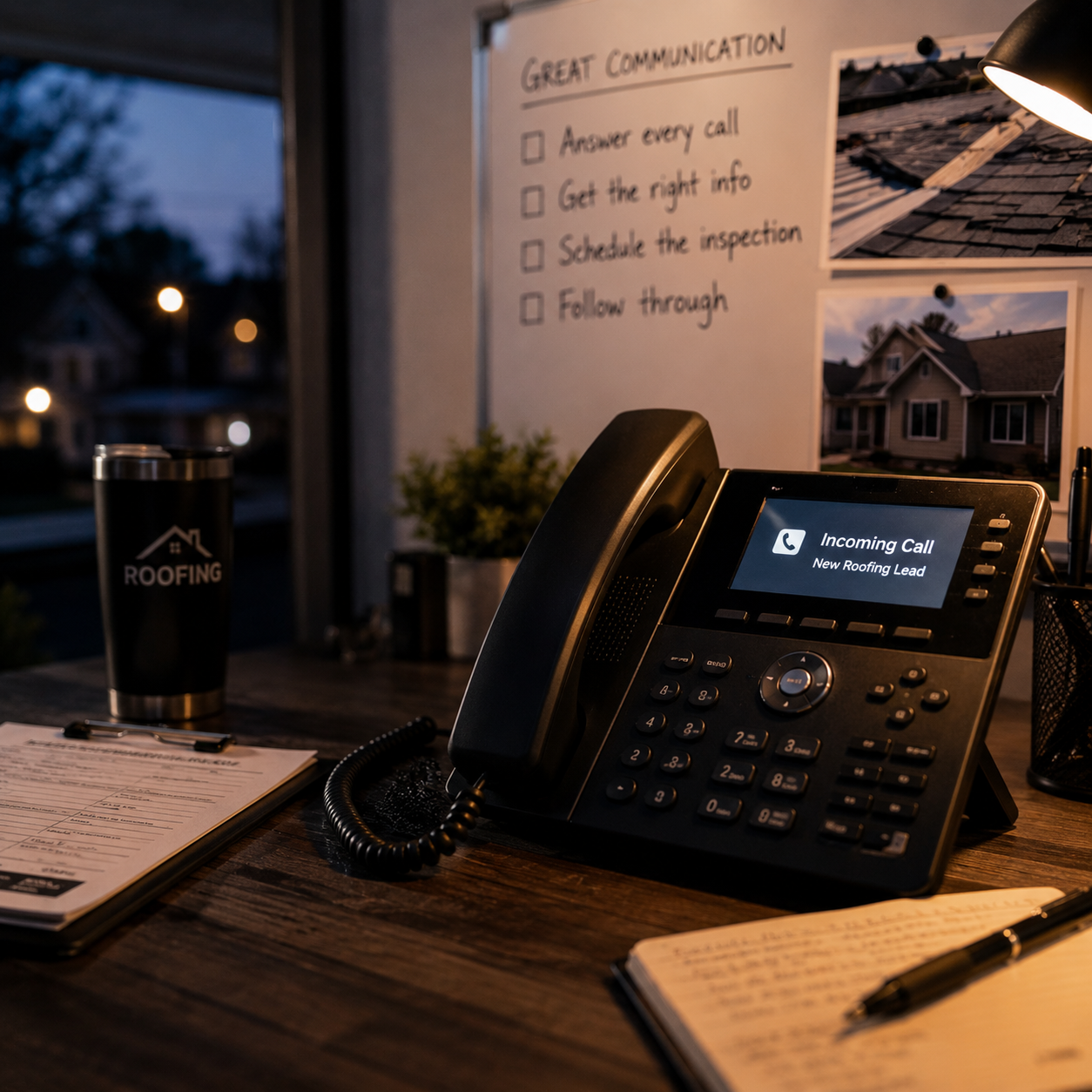
If the communication you already give a customer mid-project is something you're proud of, the first call should be held to the same bar, not a lower one. That means covering the phone after hours, not just during posted business hours, since the first call doesn't wait for your schedule any more than a mid-project question does. It means telling a routine question apart from an actual emergency the same way you'd triage anything else. It means getting real information from the homeowner instead of just a name and a callback number. It means being able to book the inspection on the spot instead of promising someone will follow up, the same way you'd confirm a job detail instead of leaving it vague. And it means an answering service for roofing companies, if you're using one, actually representing how your roofing company talks, not reading from a script built for whoever else signed up that month.
That's the standard. A traditional answering service for contractors gets you partway there. A virtual receptionist, human or software-based, usually gets you further, though the cost varies more than it should for what you're actually getting. The roofing answering services worth paying for sound like your roofing company, not a small business phone answering service handling roofers and salons off the same script.
The Money Already Spent On The Call Nobody Heard
Every home improvement company deals with some version of this, whether it shows up in home improvement marketing spend or home improvement lead generation numbers that quietly don't add up. The home improvement leads you already paid for deserve the same communication standard as the customer you already have, not a lesser one. A call that goes unanswered is the most expensive way to lose one. You paid for it once in the ad, and again in the job that went to whoever else picked up.
Extend The Standard You Already Have
This is exactly the gap Lilly closes, and it's worth naming precisely what she does. She's not a lesser version of good communication filling in until a person's available. Pond Roofing found this out over a Memorial Day weekend storm: ten leads came in while their office was closed, and Lilly answered every one of them. Ten appointments were on the calendar by Monday morning, work that would have been ten voicemails the week before. She holds the same standard you already apply once someone's a customer, just moved to the moment before they are one.
You already know how to communicate well. I hear it from roofing company owners all the time, and I believe them. The only fix here is applying that same instinct sixty seconds earlier than you currently do.
About the Author
Matthew Sanborn is a Process Specialist at Alivo, an AI lead engagement platform for roofing and home improvement contractors. His work includes regular conversations with roofing companies evaluating and operating CRM and lead-response systems.